
Martial Arts and Ageing: Training as You Get Older

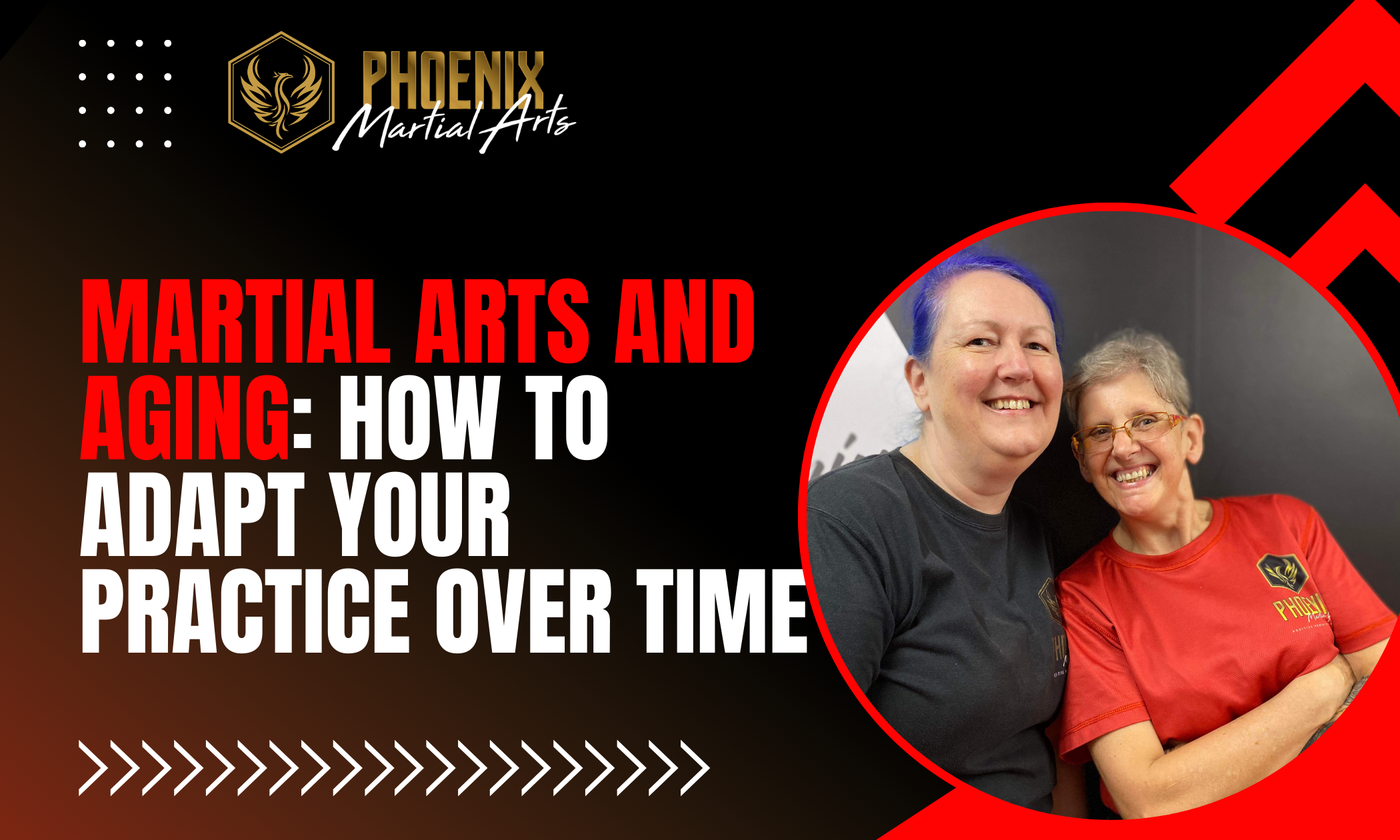
Getting older does not automatically mean giving up challenging exercise or learning new skills.
For some people, it simply changes what they want from training.
You may care less about being the fastest person in the room and more about improving your technique. You might pay more attention to recovery than you did years ago. Or perhaps you have never trained before and are wondering whether you have left it too late to start.
Martial arts can adapt to those different stages.
At Phoenix Martial Arts, our adult karate and kickboxing programmes include complete beginners as well as people who have trained previously. The aim is not to make everybody train in the same way. It is to develop skills progressively and train at a level appropriate to the individual.
Am I Too Old to Start Martial Arts?
One of the biggest barriers for adults is often the assumption that they should have started years ago.
You do not need a childhood background in martial arts to begin as an adult.
You also do not need to get fit before attending your first class.
If you have been inactive for a while, the sensible approach is simply to start gradually. Our guide to starting martial arts when you’re out of shape or haven’t exercised for years looks at that first step in more detail.
The comparison that matters is not between you and somebody who has trained for ten years. It is between where you are now and where consistent training can take you.
How Martial Arts Training Changes as You Get Older
Someone who has trained for years may notice that their approach changes over time.
That does not necessarily mean becoming less capable. Often it means becoming more considered about how you train.
You may start paying greater attention to:
- Technique rather than relying purely on speed or power;
- Efficient footwork and movement;
- Appropriate warm-ups;
- Mobility and comfortable range of motion;
- Recovery between sessions;
- Consistency rather than maximum intensity.
Martial arts give you plenty of ways to continue progressing without every improvement being based on physical output.
Your timing can improve.
Your movement can become more efficient.
Your understanding of techniques can deepen.
And experience itself becomes an important part of training.
Technique Becomes More Important Than Trying to Keep Up
It is easy to associate martial arts with speed, power and athleticism.
Those things have their place, but good martial arts is also about control, balance, positioning, timing and technique.
As students gain experience, they often become better at recognising where unnecessary effort is being used. A movement that once required a lot of physical effort can become more efficient because the technique improves.
That gives martial arts a long-term progression path. You do not have to measure every session by how exhausted you are afterwards. There is always another technical detail to work on.
Strength, Balance and Coordination Still Matter
Karate and kickboxing involve the whole body.
You step, turn, change direction, shift your weight, coordinate your hands and feet and learn sequences of movement. That means training challenges several physical skills together rather than isolating one movement at a time.
For adults who want to remain active, that variety can make martial arts much more interesting than repeatedly doing the same workout.
It also means progress can show up in different ways.
You may notice that your stance feels more stable, a combination becomes smoother, or a movement that originally felt awkward begins to make sense.
What About Flexibility?
You do not need to be particularly flexible before starting martial arts. That is another common misconception.
Not everybody needs to kick at head height, and beginners should not expect their body to perform movements it has never practised before. Range of motion can be developed gradually alongside technique.
The important thing is progression rather than forcing yourself into positions because somebody else in the class can already perform them.
Recovery Becomes Part of Training
Training consistently does not mean ignoring fatigue.
Recovery is part of being able to keep training over the long term. Sleep, rest days and recognising when your body needs more recovery all become increasingly important when martial arts is something you want to continue for years rather than weeks. We cover this more in our guide to rest and recovery during martial arts training.
The goal is not to train as hard as possible every time you walk through the door. It is to be able to come back and continue progressing.
Staying Active Without Making Exercise the Only Goal
One useful difference between martial arts and a conventional workout is that exercise is not the only objective.
You are learning something.
There are techniques to improve, combinations to remember, gradings to work towards and new skills to develop.
That can give training more purpose than simply trying to complete a certain number of minutes of exercise.
For many adults, having something specific to learn also makes it easier to stay interested in being active.
Martial Arts Can Keep Challenging Your Mind Too
A class requires concentration.
You listen to instructions, remember movements, coordinate different parts of your body and react to what is happening around you. As techniques become more familiar, new ones are introduced.
That process of continually learning is one of the reasons martial arts can remain interesting even after years of training.
There is rarely a point where you simply know everything.
Confidence Can Change With Experience
Starting something unfamiliar can be uncomfortable at any age.
Adults can be especially conscious of being beginners because we become used to operating in environments where we already know what we are doing. Martial arts change that.
At first, you may forget techniques or need an instructor to demonstrate something several times. Then gradually those movements become familiar.
Seeing that progress can change how you view your own ability to learn something new. That broader relationship between training and self-confidence through martial arts is something we explore separately.
What About Martial Arts in Retirement?
Retirement can create something many adults have previously struggled to find: Time.
That can make it an ideal opportunity to learn something new rather than simply becoming less active. You do not need to approach martial arts to compete.
For many students, the attraction is having a regular class, developing skills, staying active and being part of a group of people who train together.
Karate or Kickboxing for Older Adults?
There is no single martial art that is automatically right for everybody based purely on age. At Phoenix Martial Arts, adults can choose between Adult Karate and Adult Kickboxing at participating academies.
Karate may appeal to someone interested in structured technical progression, traditional martial arts skills and grading. Kickboxing may appeal to someone who enjoys striking, combinations, movement and a more fitness-focused element alongside learning technique.
The better choice is normally the one you enjoy enough to keep attending.
Can Existing Martial Artists Keep Training as They Age?
Yes, but training may evolve.
An experienced martial artist does not need to prove that they can train exactly as they did ten or twenty years earlier.
Long-term training is about adapting while continuing to develop. That might mean changing intensity on certain days, spending more time refining technique, being more deliberate about recovery or changing the goals you set yourself.
Those adjustments do not make the training less valuable.
They are often what allow martial arts to remain part of your life for longer.
When Should You Speak to a Health Professional?
Martial arts instructors can adapt exercises and techniques within the class, but they are not a replacement for medical advice.
If you have an existing health condition, significant injury, persistent pain or concerns about beginning a new form of exercise, speak to an appropriate healthcare professional before starting.
Once you are able to train, let your instructor know about anything relevant so they can help you approach the session appropriately.
Start From Where You Are Now
There is no ideal age at which everybody should start martial arts.
Some people begin as children.
Others start in their 20s or 30s.
Some discover it considerably later.
What matters is what you want to do from this point onwards.
You do not need to arrive fit, flexible or experienced. You need somewhere appropriate to start and enough consistency to give yourself time to improve. Find your nearest Phoenix Martial Arts academy and book a free taster session to see which class feels right for you.


