
Martial Arts vs Gym: Which Workout Is Right for You?

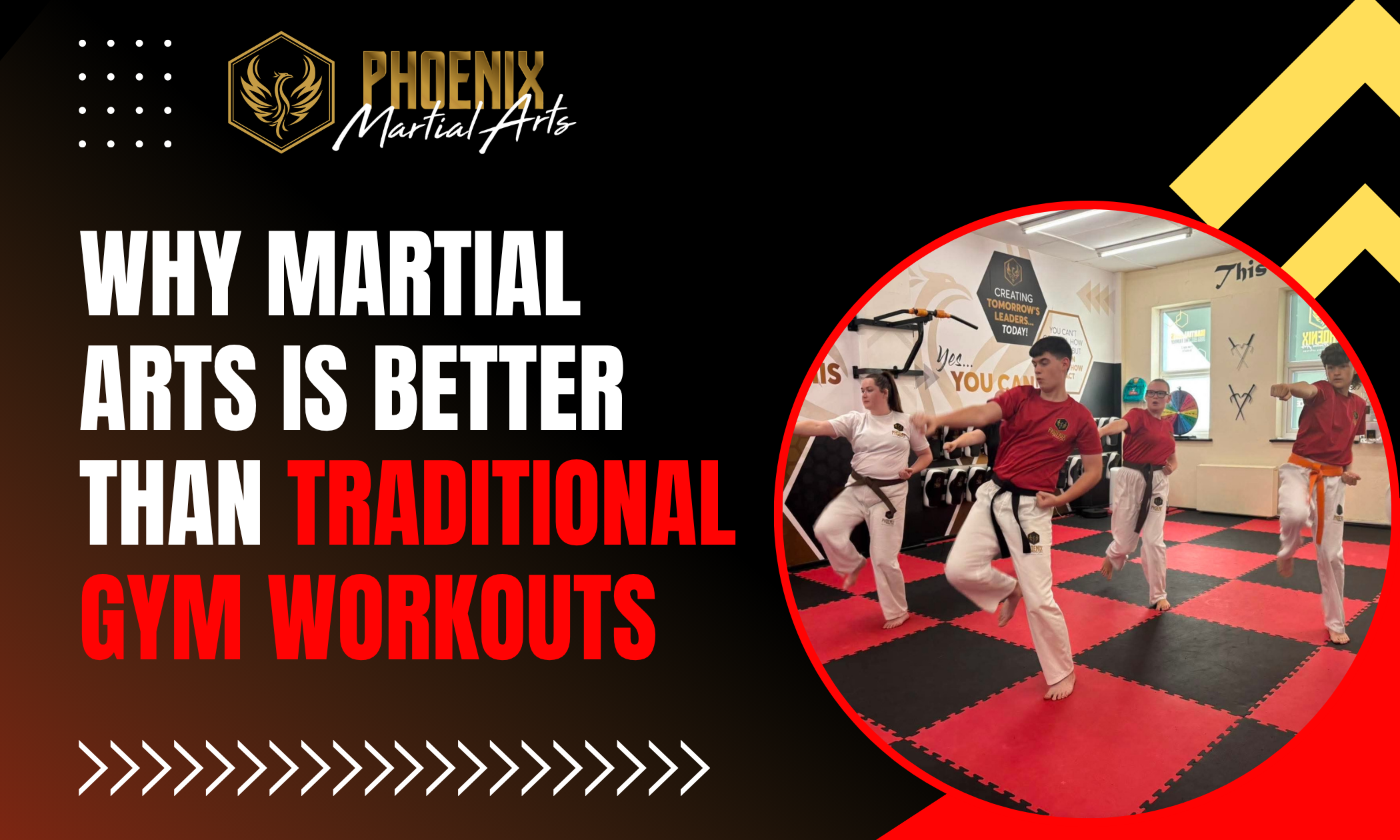
Joining a gym is one of the first things many people consider when they want to get fitter.
For some people, it works brilliantly. They enjoy choosing their own exercises, lifting weights, using cardio equipment and following a programme independently. For others, the motivation starts well but gradually disappears. The same routine becomes repetitive, cardio machines start feeling longer every week, and eventually sessions become easier to skip.
That does not mean gyms do not work. It may simply mean that the type of exercise does not suit the person doing it.
Martial arts offers something different. You are still exercising, but you are also learning techniques, developing a skill, working with an instructor and progressing towards something beyond simply completing another workout.
So when comparing martial arts with the gym, the better question is not which one is universally better. It is which type of training you are more likely to enjoy, stick with and continue progressing in.
Martial Arts Gives Your Workout a Purpose
One of the biggest differences between martial arts and conventional gym training is that the exercise is connected to learning a skill. You might be improving a kick, working on a combination, developing your footwork or learning how to move more efficiently. That gives the physical work a reason. You are not simply trying to finish another twenty minutes of cardio. You are trying to become better at something.
For people who find traditional workouts repetitive, that can make a big difference to how engaging exercise feels.
You Are Learning While You Exercise
Progress in the gym might mean lifting more weight, improving your cardiovascular fitness or completing a longer session.
Martial arts gives you other ways to recognise improvement as well. A technique that felt confusing starts making sense. Your balance improves. You remember combinations more easily. Your movement becomes more controlled, and your timing starts to develop.
You are building physical fitness and technical ability at the same time, and that creates a different type of motivation because there is always another part of your technique to refine. If you are interested in that side of training, our guide to improving your martial arts techniques looks at how those skills develop over time.
Martial Arts Workouts Offer Plenty of Variety
A gym programme can be as varied as you make it, but many people naturally settle into the same routine.
Martial arts classes tend to change because there are different skills to work on. One session might focus on technique, while another could include combinations, movement, pad work, fitness or controlled partner drills.
Karate and kickboxing also introduce new techniques as you progress, so training does not simply stop changing once your basic fitness improves. That variety can be particularly useful if boredom has been one of the reasons you have struggled to maintain exercise in the past.
Is Martial Arts a Full Body Workout?
Martial arts involve much more than moving your arms and legs independently.
Footwork uses the lower body. Punches and blocks involve the upper body, while kicks rely on the legs, hips and core. Balance, movement and changes of direction require different parts of the body to work together.
Depending on the class, training can also challenge cardiovascular fitness, coordination, mobility and muscular endurance. The fitness develops alongside the techniques you are learning, rather than being the only purpose of the session.
For anyone particularly interested in the fitness side of striking, kickboxing offers a full-body workout combining movement, combinations and conditioning.
Martial Arts Keeps Your Brain Involved Too
Martial arts is not purely physical.
You need to listen to your instructor, remember techniques, coordinate movements and make adjustments when something does not go as planned.
Even a relatively simple combination can initially feel complicated when you are thinking about your stance, hands, feet, balance and the order of each movement. As those skills become more familiar, new challenges are introduced.
That mental involvement can make a martial arts class feel very different from exercise where you are simply repeating the same movement for a set amount of time.
What Does the Gym Do Better?
There are plenty of things conventional gym training does extremely well. If your goal is specifically to increase maximal strength, build muscle or follow a detailed resistance-training programme, a well-equipped gym provides tools that a martial arts class is not designed to replace.
You also have more freedom to choose exactly when you train, how long you stay and which areas you work on. Some people genuinely enjoy putting their headphones on, training independently and following their own routine.
If that sounds like you, there may be no reason to replace the gym at all. Martial arts and gym training can also complement each other rather than having to compete.
Martial Arts Includes Coaching
Another major difference is that martial arts training is instructor-led. You are not expected to walk into an academy already knowing which exercises to choose or whether your technique is correct.
An instructor demonstrates the movement, watches what you are doing and gives you feedback.
That can be particularly helpful for beginners who find the idea of entering a gym and creating their own programme intimidating.
You are still responsible for putting the effort in, but you are not trying to work everything out by yourself.
You Do Not Need to Get Fit Before Starting
A common concern is: “I’ll start martial arts once I’ve got fitter.”
But fitness is one of the things martial arts can help you develop. You do not need to reach a particular standard before your first class. If you have not exercised for some time, you start at your current level and allow your fitness and technique to improve gradually.
Our guide to starting martial arts when you’re out of shape or haven’t worked out for years looks specifically at that concern. Nobody expects someone attending their first class to have the fitness or technical ability of a student who has trained for years.
Martial Arts Can Build Confidence Through Progress
Starting something completely new can feel uncomfortable.
You might not know anybody in the class. You may not understand the terminology or know whether you will be able to keep up.
But that also gives you a clear starting point.
As you attend classes, learn new skills and become more comfortable with the movements, you begin to see your own progress. That is one of the ways martial arts can build self-confidence.
The confidence does not come from suddenly believing you can do everything. It comes from having evidence that you can learn, practise and improve.
The Social Side Can Make Training Easier to Stick With
Gyms can absolutely have strong communities, but conventional gym training is often an individual activity.
People arrive, complete their workout and leave.
Martial arts naturally involves more interaction because you train alongside the same students, work with partners and learn from an instructor. Over time, those familiar faces can become part of the reason you keep attending.
That social element will not matter to everybody, but if exercising alone has made it difficult to stay consistent in the past, being part of a class can make training feel very different.
Martial Arts Gives You Something to Work Towards
Motivation changes.
There will always be days when you do not particularly feel like exercising. One advantage of martial arts is that progress does not stop with fitness.
There may be a technique you want to improve, a combination you are trying to remember, a grading ahead or simply something from the previous lesson you want to do better, and that gives your training direction.
Instead of only thinking “I need to exercise today,” you start thinking “I want to get better at this” and that shift can make consistency easier.
If fitting training around work, family and everyday life is the bigger challenge, our guide to making martial arts part of your lifestyle looks at that in more detail.
Does Martial Arts Teach Discipline?
Martial arts cannot magically make somebody disciplined. What it does provide is a regular opportunity to practise consistency.
You decide to attend training, and you turn up. You work on something that does not come easily and keep practising it. You learn that progress usually comes from repeating the basics rather than waiting until you feel highly motivated.
Over time, that habit of showing up can become valuable in its own right.
The lesson is simple: progress does not come from one extremely motivated session.
It comes from continuing to train.
Is Martial Arts Better Than the Gym for Weight Loss?
Neither should be treated as a guaranteed weight-loss solution.
Body weight and body composition depend on overall activity, nutrition, lifestyle and individual circumstances. Both gym training and martial arts can contribute to an active lifestyle.
The better option is usually the activity you enjoy enough to continue doing consistently rather than whichever one is advertised as burning the most calories in one session.
Which Is Better for Building Strength?
If pure strength development is your main objective, a structured resistance-training programme in a gym may give you more control over load, exercise selection and progression. Martial arts still require strength, but it develops it as part of movement and technique rather than treating strength as the only goal.
Many martial artists use gym-based strength training alongside karate or kickboxing. You do not necessarily need to choose one and completely abandon the other.
Karate or Kickboxing for Fitness?
Phoenix Martial Arts offers both karate and kickboxing for adults. Adult Karate combines structured technical progression, movement, self-defence and fitness, and Adult Kickboxing combines striking, combinations, movement and conditioning.
There is no universal answer about which is the better workout.
The more useful question is which type of training appeals to you enough that you will want to continue attending. If you are unsure, trying a class is much more useful than attempting to make the entire decision from descriptions online.
Do You Need to Choose Between Martial Arts and the Gym?
Not necessarily.
Plenty of people combine martial arts with gym training.
Strength work, mobility training and additional cardio can all complement regular karate or kickboxing classes.
It does not have to be an either-or decision.
But if you have repeatedly joined gyms and struggled to stay interested, trying a coached activity where you are learning a skill may give you a completely different experience.
Which Workout Is Right for You?
The best workout is not necessarily the one that looks best on paper. It is the one that suits your goals and gives you a reason to keep coming back. If independent gym training works for you, keep doing it.
If you want something more structured, social and skill-based, martial arts may be worth trying.
You do not need to be fit, flexible or experienced before starting. Explore our martial arts classes or find your nearest Phoenix Martial Arts academy and book a free taster session to see whether karate or kickboxing feels right for you.


