
Are there any negative effects of Martial Arts?

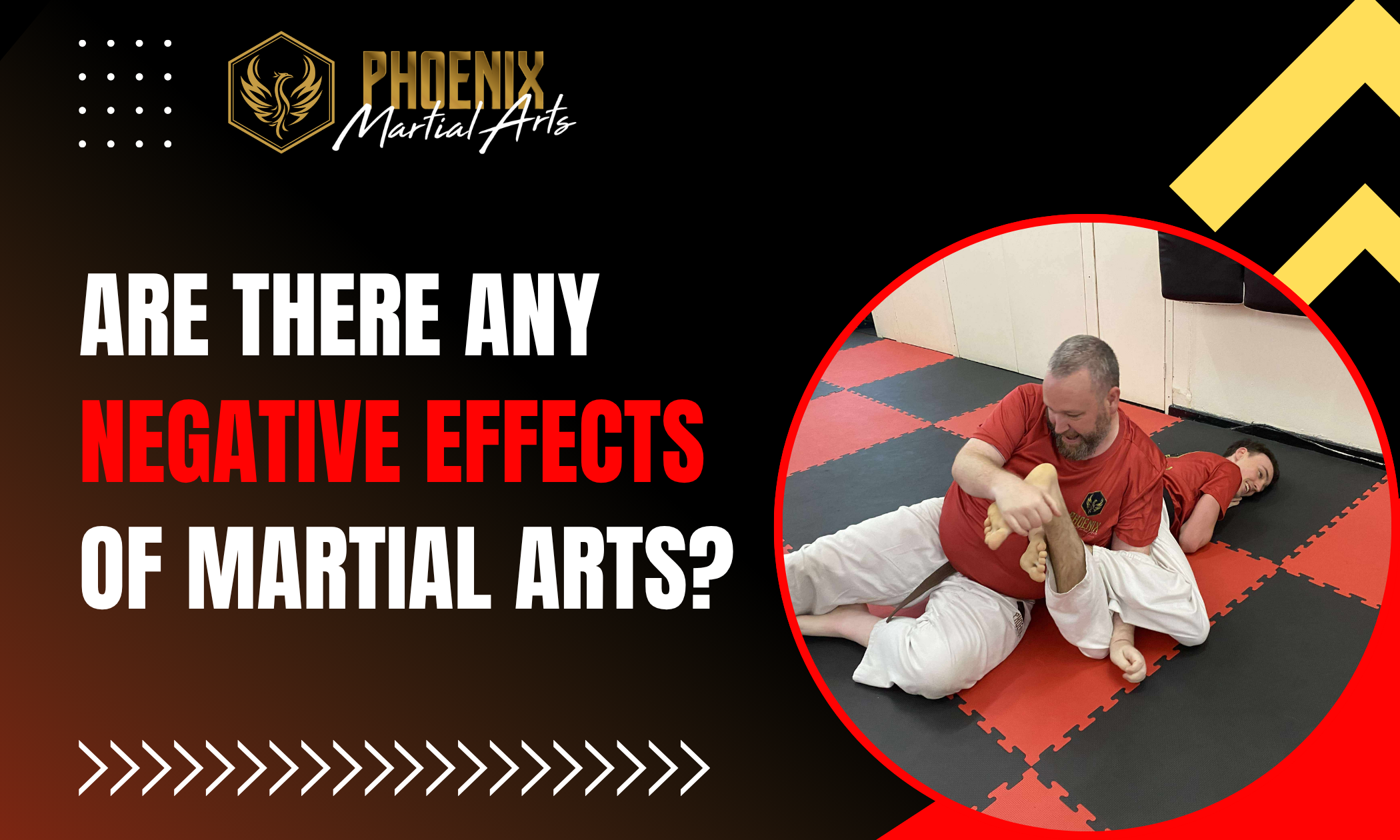
When people talk about martial arts, they usually highlight the confidence, fitness, discipline, and self-defence skills it builds. And yes—those benefits are absolutely real. But let’s have an honest conversation, because like any physical or mental training, martial arts isn’t all sunshine. There are a few potential downsides that people often don’t talk about. And if you’re thinking of enrolling yourself or your child into a programme like the ones we offer here at Phoenix Martial Arts, it’s only fair that you get the full picture.
The good news? Most of the “negative effects” you hear about aren’t actually caused by martial arts itself—but by poor instruction, unhealthy training environments, or unrealistic expectations. So let’s break it all down in a way that’s straightforward, relatable, and genuinely helpful.
Contents
- 1. Physical Injuries—But Let’s Be Real About Them
- 2. Overtraining—A Hidden Issue Most People Don’t Notice
- 3. Ego Problems—Yes, It Happens
- 4. Misunderstanding Martial Arts as a Quick Fix for Self-Defence
- 5. Becoming Too Rigid or Disciplined
- 6. Fear of Sparring or Feeling Intimidated
- 7. Comparing Yourself to Others
- 8. Conflict Mismanagement
- So… Are There Negative Effects? Yes—but Mostly When You Choose the Wrong School
- Thinking About Starting Martial Arts Training?
1. Physical Injuries—But Let’s Be Real About Them
Any sport comes with the possibility of injury. Football, gymnastics, rugby, running… you name it. Martial arts is no different. Bruises, sprains, and the occasional sore muscle are part of the journey. But here’s the key: safe training environments drastically reduce risks.
At Phoenix Martial Arts, we prioritise correct technique, proper warm-ups, controlled sparring, and progressive skill development. Injuries typically happen when students try to rush through levels, skip foundations, or learn from instructors who don’t emphasise safety.
Martial arts doesn’t have to be dangerous—unsafe teaching makes it dangerous.
2. Overtraining—A Hidden Issue Most People Don’t Notice
Martial artists are passionate people. Once you start training, it’s easy to fall in love with the process. You push harder. You stay longer. You want to get better, faster.
And if you’re not careful, you can burn out.
This looks like:
-
persistent fatigue
-
mood swings
-
nagging pain
-
declining performance
-
loss of motivation
The solution? Balance. A good instructor will encourage progress without glorifying exhaustion. At Phoenix Martial Arts, we believe in training smart, not self-destructing. Your long-term health matters more than a rushed belt promotion.
3. Ego Problems—Yes, It Happens
It might sound funny, but martial arts can actually inflate someone’s ego if they train in an unhealthy environment.
Some gyms create a culture of:
-
unnecessary aggression
-
competition over community
-
ego-driven sparring
-
“tough guy” attitudes
This kind of environment can make people feel superior, overly aggressive, or defensive.
But true martial arts does the opposite—it builds humility, control, and emotional maturity. The instructor sets the tone. If the dojo encourages respect, discipline, and learning from mistakes, ego takes a back seat.
This is exactly what we cultivate at Phoenix Martial Arts—a space where confidence grows, but arrogance doesn’t.
4. Misunderstanding Martial Arts as a Quick Fix for Self-Defence
Martial arts can improve your ability to defend yourself, but here’s the truth many people don’t want to admit: no martial art will make you invincible.
Some individuals walk into a training centre expecting a few classes to magically turn them into action heroes. When that doesn’t happen, disappointment sets in. The truth is, self-defence is about awareness, timing, calm thinking, and consistent training—not just flashy movements.
At Phoenix Martial Arts, we teach realistic self-defence and help students understand the difference between movie-style fighting and real-world awareness.
5. Becoming Too Rigid or Disciplined
This might sound odd—is too much discipline even a bad thing?
Sometimes… yes.
Martial arts students can become so focused on structure, routine, and control that they forget how to relax. Kids especially may start taking everything too seriously. This doesn’t happen often, but when it does, it’s usually due to instructors who prioritise strictness over enjoyment.
A healthy martial arts environment teaches balance: discipline and joy. Structure and freedom. Hard work and fun. At Phoenix Martial Arts, we make sure our students feel supported—not pressured.
6. Fear of Sparring or Feeling Intimidated
Martial arts can be overwhelming for beginners. Sparring, in particular, is something many people fear—not because it’s dangerous, but because it’s new and unfamiliar.
A bad instructor might push a beginner into sparring before they’re ready, creating long-term anxiety around training.
A good instructor builds confidence first.
We introduce sparring gently at Phoenix Martial Arts, with controlled drills, protective equipment, and clear boundaries. Students should feel excited—not terrified—about taking their next step.
7. Comparing Yourself to Others
Martial arts is a journey, not a race. But students—especially kids—can fall into comparing belts, skills, speed, or strength.
If comparison becomes constant, it can lead to:
-
frustration
-
jealousy
-
low self-esteem
But that’s purely an environment issue. When a martial arts centre fosters encouragement instead of rivalry, students learn to measure progress against their own growth—not anyone else’s.
At Phoenix Martial Arts, we celebrate individual improvement. Every student learns at their own pace, and that’s a core part of our culture.
8. Conflict Mismanagement
While martial arts teaches self-control, some students might initially struggle with emotions during training. For example, losing a sparring match could trigger frustration or embarrassment.
This is actually a positive turning point—martial arts forces you to face difficult emotions rather than avoid them. With guidance, students learn resilience, patience, and emotional maturity.
The “negative” quickly becomes a strengthening opportunity.
So… Are There Negative Effects? Yes—but Mostly When You Choose the Wrong School
Most of the potential downsides of martial arts boil down to:
-
poor instruction
-
lack of safety measures
-
unhealthy training culture
-
rushed progression
-
unrealistic expectations
When you train in a supportive, structured, and safety-focused environment like Phoenix Martial Arts, martial arts becomes one of the most positive influences in your life.
Physical strength improves.
Mental resilience grows.
Confidence skyrockets.
Emotional control becomes second nature.
Community becomes family.
The “negatives” don’t stand a chance in the right environment.
Thinking About Starting Martial Arts Training?
If you’ve been considering martial arts for yourself or your child, now is the perfect time to take the next step. At Phoenix Martial Arts, we offer a safe, welcoming, and empowering training environment designed for all ages and experience levels.
Whether you want to build confidence, improve fitness, learn self-defence, or simply discover a new passion, we’re here to guide you every step of the way.
👉 Ready to begin? Enrol today and experience the difference for yourself.
Your martial arts journey starts with one simple step—reach out and join us at Phoenix Martial Arts.


