
How to Improve Your Timing in Kickboxing

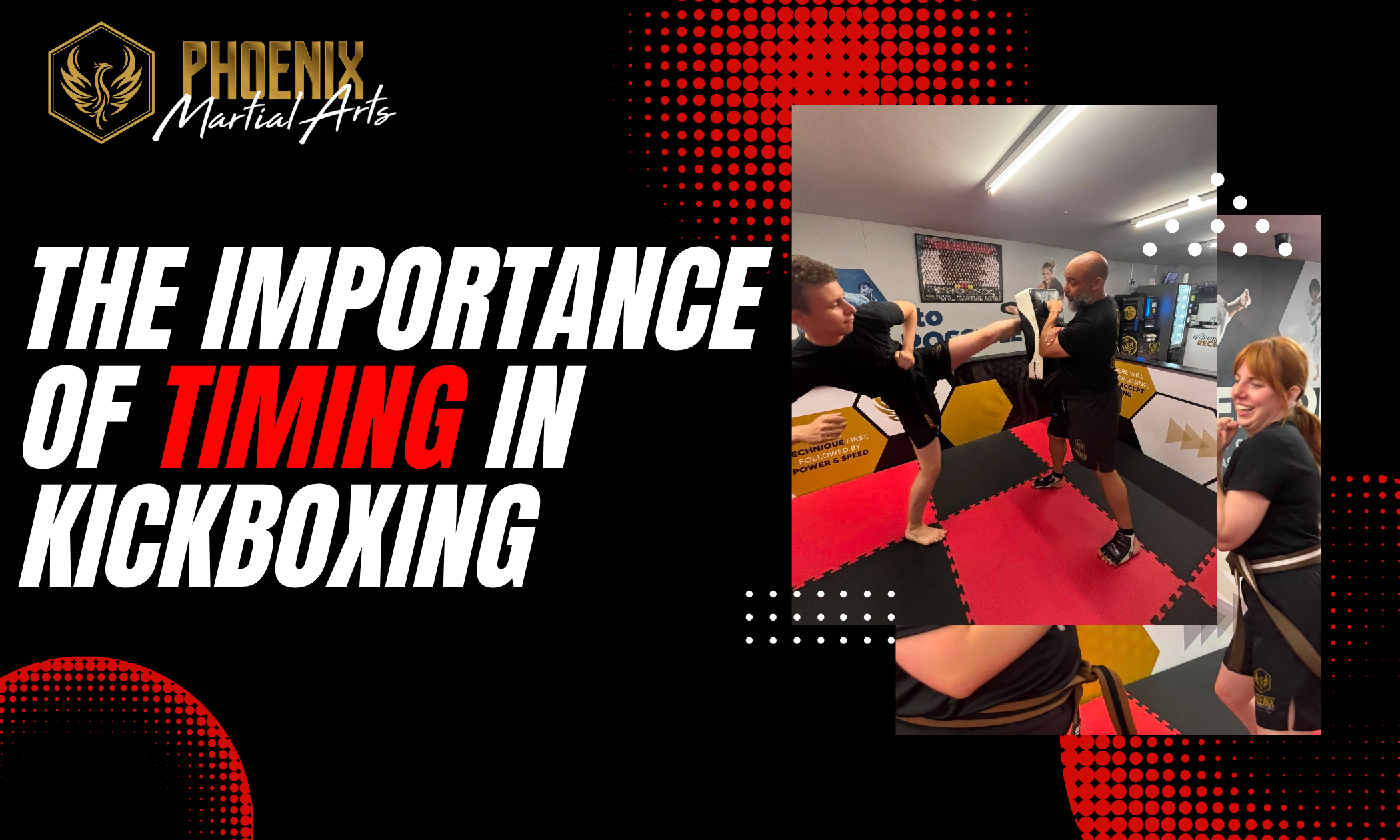
Being fast can help in kickboxing, but speed on its own does not make a technique effective. A punch thrown too early can fall short. A kick used from the wrong distance may lose its effectiveness. A defensive movement made too soon can give away what you are about to do.
That is where timing becomes important.
If you are new to kickboxing, timing can initially feel difficult because there is already plenty to think about: stance, technique, footwork, combinations and fitness.
As those fundamentals become more familiar, you start recognising not only how to perform a technique, but when to use it.
What Does Timing Mean in Kickboxing?
Timing is the ability to perform a movement at the right moment. That could mean recognising when someone moves into range, knowing when to counter after defending, or waiting until you have the correct distance before using a kick.
It is different from simply reacting as quickly as possible.
A fast reaction made at the wrong moment is still the negative reaction.
As your training develops, timing becomes one part of improving your overall martial arts technique, alongside balance, accuracy, movement and control.
Timing and Speed Are Not the Same Thing
Speed helps you perform a technique quickly. Timing helps you decide when that technique should happen.
You can be extremely fast and still attack from too far away, move too early or miss an opportunity because you rushed.
Good timing allows you to use your movement more efficiently.
Instead of thinking only about moving faster, you begin to recognise the moment when a technique is actually useful.
Distance Has a Big Effect on Timing
Distance changes constantly during kickboxing.
You step forward.
Your training partner moves backwards.
You change angle.
They move again.
A distance that was right for a technique a second ago may no longer be right.
That is why footwork and timing work together.
Good footwork allows you to move into and out of range efficiently, while timing helps you recognise the moment when you are in the right position to act.
Learning to Read Movement
Timing improves when you become better at noticing what is happening in front of you.
With experience, you begin to recognise things such as:
- changes in stance;
- when someone is moving into range;
- patterns in their movement;
- what happens after they throw a particular technique;
- when they are preparing to attack or move away.
This does not mean predicting everything another person will do.
It means becoming more aware of movement and reacting to information that is already there.
Kickboxing Drills That Can Improve Timing
Timing is something you develop through practice.
Pad Work With Changing Calls
Rather than repeating exactly the same combination at the same pace, the pad holder can vary when the technique is called.
This encourages you to watch, listen and react instead of relying purely on repetition.
Distance and Footwork Drills
Moving in and out of range helps you understand how much space different techniques require.
The aim is not simply to move quickly. It is to recognise where you need to be before using the technique.
Controlled Partner Drills
A structured partner drill gives you the chance to practise reacting to a particular movement in a controlled setting.
As you improve, the drill can become less predictable so that you have to observe and respond rather than memorise the sequence.
Defence and Counter Drills
Practising a defensive movement followed by a controlled counter helps connect reaction, distance and timing.
The goal is to stay composed rather than trying to respond as quickly as possible.
Controlled Sparring
For students who are ready for it, controlled sparring creates a more unpredictable environment where distance and rhythm are constantly changing.
It gives you an opportunity to apply the skills developed during more structured drills.
Common Timing Mistakes
One of the biggest mistakes is rushing. Beginners can become eager to use a technique as soon as they see an opportunity. That often means attacking from the wrong distance or moving before the opening is really there.
The opposite problem is hesitation. Wait too long, and the opportunity disappears.
Developing timing means learning the difference between patience and hesitation.
You stay composed enough to recognise the moment, then act when it arrives.
Timing Becomes Harder When You Are Tired
Technique usually feels easier at the beginning of a session.
As you become tired, footwork can become slower, concentration can drop, and it becomes tempting to rely on effort rather than technique.
That is when efficient movement becomes even more useful.
Good timing can reduce unnecessary movement and help you stay composed rather than simply trying to work harder.
The physical side of training matters too, which is why developing the fitness and conditioning used in kickboxing can support the technical side of your training.
Timing Can Build Confidence
There is a noticeable difference between performing a technique because you hope it will work and recognising the right moment to use it.
As your timing improves, movements can begin to feel less rushed and more deliberate. That growing sense of control can contribute to the confidence that develops through kickboxing.
Confidence does not mean thinking every technique will work.
It means becoming more comfortable making decisions and trusting the skills you have practised.
How Long Does It Take to Improve Timing?
There is no fixed timeline.
Timing develops through coaching, repetition and experience.
Sometimes you will move too early.
Sometimes you will react too late.
That feedback is part of learning.
Regular practice matters more than trying to master everything in a few sessions. If work and family commitments make consistency difficult, finding a way to fit kickboxing into a busy week can be more useful than training intensely for a short period and then stopping.
Improve Your Kickboxing at Phoenix Martial Arts
Timing is only one part of becoming a better kickboxer. Technique, distance, fitness, footwork and decision-making all develop together through regular training.
Our Adult Kickboxing programme welcomes complete beginners as well as people looking to improve existing skills. Younger students can develop the same fundamentals through 4–7 Junior Kickboxing and 8–13 Junior Kickboxing. You can find your nearest Phoenix Martial Arts academy and book a free taster session to experience a class.


