
The importance of learning to control yourself in martial arts

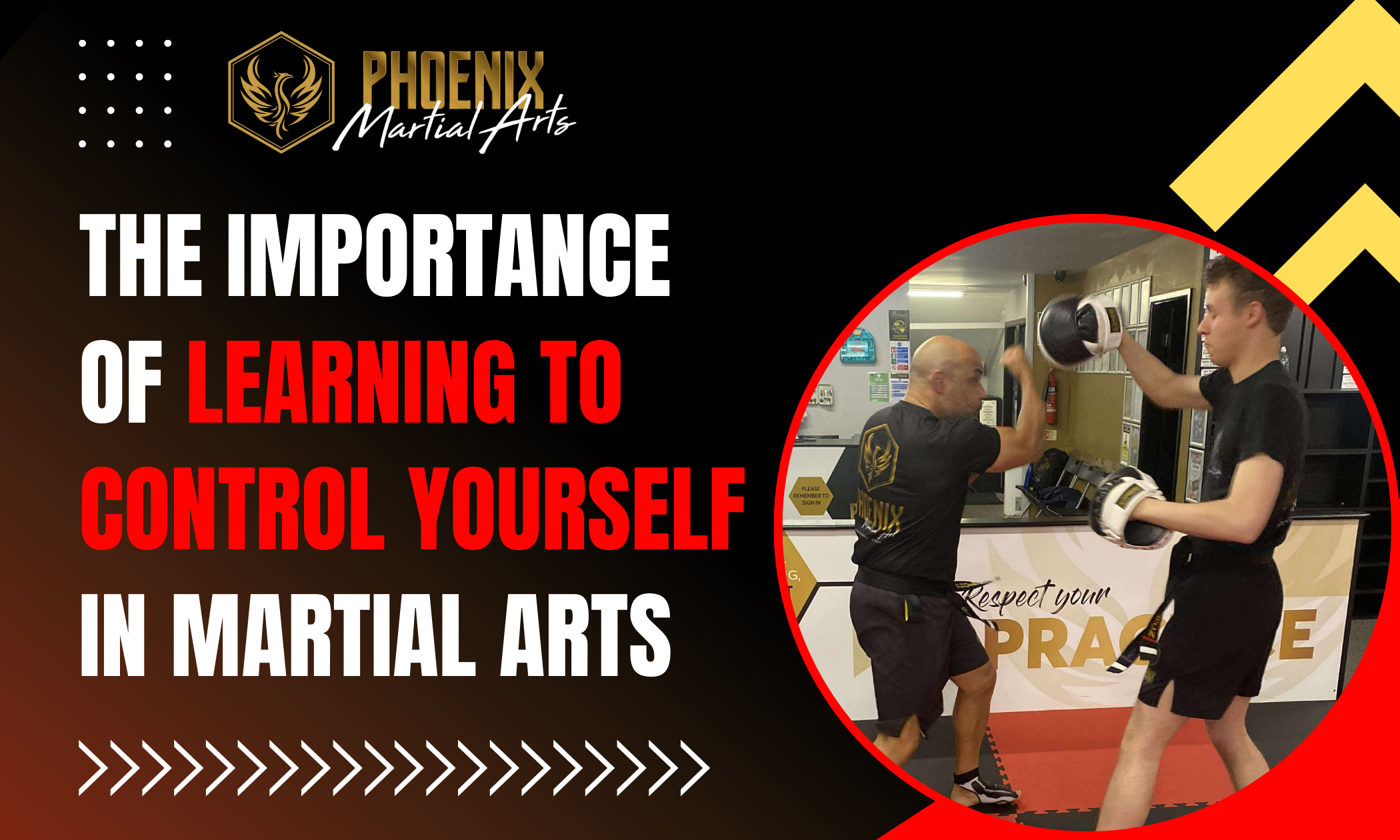
When people think about martial arts, they often picture powerful kicks, fast punches, and impressive techniques. What they don’t always see is the quiet skill that sits underneath all of it: self-control.
At Phoenix Martial Arts, self-control is not a side lesson—it’s the foundation of everything we teach. Without it, strength becomes reckless, speed becomes unsafe, and confidence turns into ego. With it, martial arts becomes a powerful tool for personal growth, discipline, and respect.
So why is learning to control yourself so important in martial arts? And how does that skill extend far beyond the training floor?
Let’s explore.
Contents
- Self-Control Is the Real Strength
- Why Control Matters More Than Power
- Learning Control Through Technique
- Emotional Control Under Pressure
- Self-Control Builds Respect
- Control Prevents Ego From Taking Over
- Self-Control and Sparring
- Control Turns Martial Arts Into Self-Defence
- Learning to Control Anger and Frustration
- Control Improves Focus and Awareness
- Teaching Children Self-Control Early
- Self-Control Creates Safer, Stronger Communities
- Control Is a Lifelong Skill
- Why Phoenix Martial Arts Focuses on Control
- Final Thoughts: Control Is the True Goal
- Ready to Start Your Journey?
Self-Control Is the Real Strength
True strength in martial arts isn’t about how hard you can hit. It’s about knowing when not to.
Self-control allows you to:
-
apply techniques safely
-
train with respect for others
-
stay calm under pressure
-
make smart decisions instead of emotional ones
Anyone can throw a punch. It takes real discipline to hold back.
At Phoenix Martial Arts, students learn early on that control is what separates a martial artist from someone who is simply aggressive.
Why Control Matters More Than Power
Power without control is dangerous.
In training, this can lead to:
-
unnecessary injuries
-
broken trust between training partners
-
poor technique development
-
unsafe habits
Martial arts is a long-term journey. If you don’t learn to control your movements, emotions, and reactions, that journey often gets cut short.
Control allows you to train harder and safer, pushing your limits without crossing them.
Learning Control Through Technique
Martial arts doesn’t teach self-control through lectures. It teaches it through experience.
Every class at Phoenix Martial Arts reinforces control by:
-
slowing techniques down before speeding them up
-
emphasising precision over force
-
practising restraint during partner drills
-
correcting excess power or sloppy execution
Over time, students learn that accuracy and timing are far more effective than brute strength.
Emotional Control Under Pressure
Martial arts places you in challenging situations on purpose.
You might:
-
struggle with a new technique
-
feel frustrated when progress is slow
-
feel nervous during sparring
-
make mistakes in front of others
These moments are not failures. They are opportunities to practise emotional control.
Learning to stay calm, breathe, and refocus under pressure is one of the most valuable lessons martial arts offers. Students at Phoenix Martial Arts often notice that this emotional control carries over into everyday life—at school, at work, and in relationships.
Self-Control Builds Respect
Martial arts is built on mutual respect.
You show control by:
-
listening to instruction
-
respecting training partners’ safety
-
following rules and boundaries
-
accepting correction without defensiveness
Respect isn’t demanded—it’s demonstrated.
At Phoenix Martial Arts, learning self-control creates an environment where everyone feels safe, supported, and motivated to improve.
Control Prevents Ego From Taking Over
Ego is one of the biggest obstacles in martial arts.
Without control, ego can lead to:
-
trying to dominate partners
-
refusing feedback
-
overestimating ability
-
increased risk of injury
Self-control keeps ego in check. It reminds you that learning is more important than proving something.
Martial artists who master control tend to progress further, stay training longer, and enjoy the journey more.
Self-Control and Sparring
Sparring is where self-control is truly tested.
You’re moving fast. Adrenaline is high. Emotions can take over if you let them.
Good sparring requires:
-
controlling power
-
staying calm when hit
-
responding thoughtfully instead of reacting wildly
-
respecting your partner’s limits
At Phoenix Martial Arts, sparring is treated as a learning experience, not a fight. Control ensures that everyone leaves the mat better than they arrived.
Control Turns Martial Arts Into Self-Defence
One of the biggest misconceptions about self-defence is that it’s about aggression.
In reality, effective self-defence relies on:
-
awareness
-
restraint
-
judgement
-
proportional response
Self-control allows you to assess situations clearly and choose the safest option. Martial arts training at Phoenix Martial Arts emphasises that avoiding conflict or de-escalating situations is often the strongest choice.
Learning to Control Anger and Frustration
Anger is a natural emotion—but how you handle it matters.
Martial arts provides a structured outlet for releasing tension while teaching you to:
-
recognise emotional triggers
-
channel energy productively
-
respond instead of react
Many students find that regular training helps them manage stress and anger far more effectively than before. The discipline learned on the mat often translates into greater emotional balance off the mat.
Control Improves Focus and Awareness
Self-control isn’t just about holding back—it’s about paying attention.
Martial arts sharpens focus by demanding:
-
mental presence
-
body awareness
-
precise timing
At Phoenix Martial Arts, students learn to control distractions and stay engaged. This improved focus often benefits other areas of life, from work performance to personal goals.
Teaching Children Self-Control Early
For children, learning self-control is one of the most valuable life skills martial arts can offer.
Through training, children learn to:
-
wait their turn
-
follow instructions
-
manage emotions
-
respect boundaries
At Phoenix Martial Arts, children are taught that strength comes with responsibility. These lessons build confidence, patience, and emotional maturity that lasts well beyond childhood.
Self-Control Creates Safer, Stronger Communities
A martial arts school is a community. Self-control keeps that community healthy.
When students practise control, the environment becomes:
-
supportive rather than competitive
-
safe rather than intimidating
-
focused rather than chaotic
This atmosphere allows everyone—beginners and advanced students alike—to grow at their own pace.
Control Is a Lifelong Skill
Perhaps the most important thing about self-control in martial arts is that it doesn’t stop at the dojo door.
It shows up when:
-
you stay calm during a disagreement
-
you handle stress more effectively
-
you think before reacting
-
you choose patience over impulse
Martial arts gives you a place to practise control so that it becomes instinctive in everyday life.
Why Phoenix Martial Arts Focuses on Control
At Phoenix Martial Arts, we believe martial arts should build people up, not break them down.
Our training prioritises:
-
discipline over dominance
-
control over chaos
-
respect over ego
-
growth over shortcuts
This approach helps students become not just better martial artists, but better individuals.
Final Thoughts: Control Is the True Goal
Martial arts isn’t about learning how to hurt others. It’s about learning how to master yourself.
When you develop self-control, you gain:
-
confidence without arrogance
-
strength without aggression
-
discipline without rigidity
That’s the real power of martial arts.
Ready to Start Your Journey?
If you’re looking to build discipline, confidence, and self-control in a supportive environment, Phoenix Martial Arts is here to help.
👉 Enrol today at Phoenix Martial Arts and begin your journey towards stronger self-control, inside and out.
The most important opponent you’ll ever face is yourself—and learning to control that is where true martial arts begins.


