
The role of muscle memory in Martial Arts

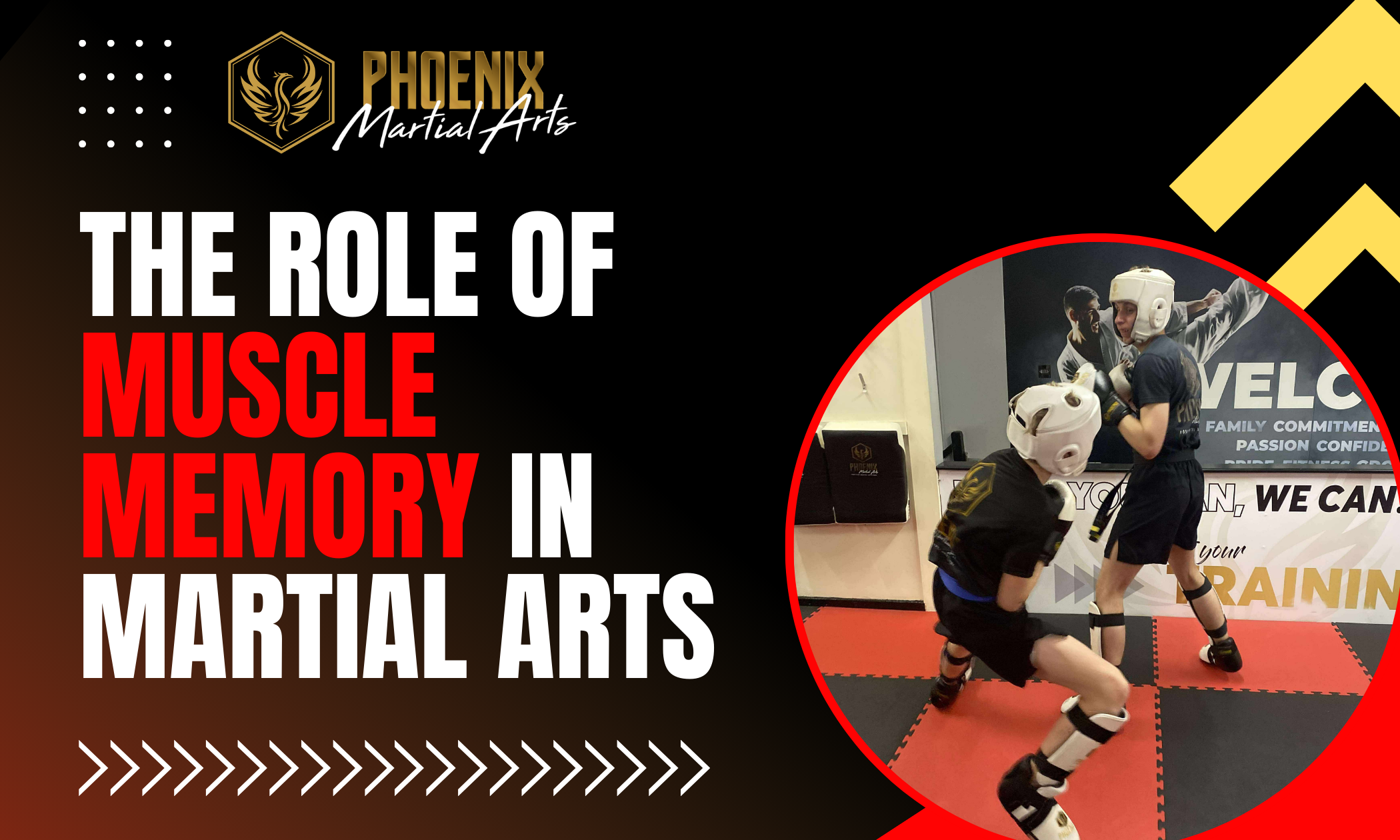
Martial arts is not just physical.
Yes, strength matters. Yes, speed helps. But anyone who has trained for a while knows that many matches are won long before the first strike is thrown.
They are won in the mind.
At Phoenix Martial Arts, we often say that the body follows the mind. If you can stay calm, observant, and unpredictable, you already hold an advantage. Playing mind games does not mean being sneaky or disrespectful. It means staying composed, controlling information, and never giving away more than you need to.
So how do you do that without overthinking it?
Contents
- What Does “Do Not Show Your Hand” Really Mean?
- Calm Is One of the Strongest Mind Games
- Do Not Rush to Show Your Best Techniques
- Your Body Language Speaks Before You Do
- Silence Can Be Disruptive
- Controlling the Pace Is a Mental Battle
- Emotions Are Information. Guard Yours Carefully
- Confidence Without Arrogance
- Observation Is the Other Half of Mind Games
- Why This Matters Beyond Competition
- Mind Games Are About Respect, Not Manipulation
- Training the Mind Is Just as Important as Training the Body
- Final Thoughts
- Ready to Train Your Mind as Well as Your Body?
What Does “Do Not Show Your Hand” Really Mean?
In martial arts, showing your hand does not mean being dishonest. It means not giving your opponent unnecessary clues.
Think about it for a moment.
Have you ever faced someone who looked nervous before sparring? Or someone who showed frustration every time something did not work?
Those reactions tell a story.
When you show your emotions too clearly, your opponent learns:
-
when you are tired
-
when you are unsure
-
when something is working against you
Keeping your hand hidden is about emotional discipline, not trickery.
Calm Is One of the Strongest Mind Games
The simplest and most powerful mental edge is calmness.
When you stay relaxed while someone else is tense, it creates uncertainty. Your opponent starts asking themselves questions.
Why is this not working?
Why are they not reacting?
What do they know that I do not?
At Phoenix Martial Arts, students are trained to breathe steadily, move with intention, and avoid rushed reactions. Calmness alone can unsettle an opponent far more than aggression.
Do Not Rush to Show Your Best Techniques
There is a temptation, especially when adrenaline kicks in, to throw everything you have straight away.
Big movements. Favourite combinations. Full power.
But what happens when your opponent figures you out early?
Holding something back is not weakness. It is awareness.
When you vary your techniques and avoid repeating patterns, you stay unpredictable. Your opponent spends more time reacting and less time planning.
Have you ever noticed how difficult it is to face someone when you cannot read them?
That uncertainty is powerful.
Your Body Language Speaks Before You Do
Mind games are often played without a single word being spoken.
Your posture.
Your eye line.
Your breathing.
All of these send messages.
Slumped shoulders suggest fatigue.
Fidgeting suggests nerves.
Sharp reactions suggest impatience.
At Phoenix Martial Arts, students learn to stay neutral in their body language. Relaxed but ready. Focused but not tense.
Ask yourself this. What message does your body send when things get difficult?
Silence Can Be Disruptive
Not everyone realises how powerful silence can be.
Some fighters try to dominate with noise, shouting, or exaggerated movements. Others stay quiet and composed.
Silence forces the other person to fill the space with their own thoughts. Often, those thoughts turn into doubt.
Staying quiet does not mean being passive. It means conserving energy and attention while your opponent does the opposite.
Controlling the Pace Is a Mental Battle
Speed is not just physical. It is psychological.
If you rush when your opponent wants you to rush, you are playing their game. If you slow things down when they want chaos, you take control.
Changing the pace disrupts rhythm. It forces your opponent to constantly adjust.
At Phoenix Martial Arts, students are encouraged to recognise when to press and when to pause. This awareness makes you far harder to read and much harder to predict.
Emotions Are Information. Guard Yours Carefully
One of the most common mistakes people make is wearing their emotions openly.
A missed technique followed by a frustrated expression.
A clean hit followed by overconfidence.
These moments give your opponent information they did not earn.
Mind games are often about emotional control. Not suppressing emotions, but choosing not to broadcast them.
Can you acknowledge frustration internally without showing it externally?
That skill alone can shift the balance.
Confidence Without Arrogance
There is a fine line between confidence and arrogance.
Confidence is quiet. Arrogance is loud.
When you appear comfortable without trying to prove anything, it can be unsettling for the person facing you. They expect reactions. They expect effort to show.
Instead, they see control.
At Phoenix Martial Arts, confidence is built through preparation, not performance. When you trust your training, you do not feel the need to show off.
Observation Is the Other Half of Mind Games
Playing mind games is not just about hiding your hand. It is also about reading theirs.
Every opponent gives clues:
-
repeated movements
-
preferred distances
-
reactions under pressure
The calmer you are, the more clearly you see.
Instead of forcing outcomes, you begin to respond intelligently. This is where strategy replaces brute force.
Ask yourself this. Are you watching your opponent, or are you too busy thinking about what you want to do next?
Why This Matters Beyond Competition
These mental skills do not stop at sparring or tournaments.
Learning not to show your hand teaches:
-
emotional regulation
-
patience under pressure
-
confidence without ego
-
awareness of others
These qualities transfer into work, relationships, and everyday challenges.
When you can stay composed while others react emotionally, you gain clarity and control.
That is a powerful life skill.
Mind Games Are About Respect, Not Manipulation
It is important to say this clearly.
Playing mind games in martial arts is not about intimidation, deception, or disrespect. It is about discipline and self control.
At Phoenix Martial Arts, the emphasis is always on respect. Respect for your opponent, respect for yourself, and respect for the art.
The strongest fighters are often the quietest.
Training the Mind Is Just as Important as Training the Body
You can be physically strong and still be mentally reactive.
True development comes when the mind and body work together.
Martial arts training teaches you when to act, when to wait, and when to observe. It teaches you that not every advantage needs to be shown immediately.
Sometimes, the smartest move is patience.
Final Thoughts
Not showing your hand is not about hiding who you are.
It is about choosing when and how to reveal your strengths.
When you stay calm, composed, and observant, you control more than just the fight. You control the moment.
At Phoenix Martial Arts, we believe that mastering the mental side of training is what separates good martial artists from great ones.
Ready to Train Your Mind as Well as Your Body?
If you want to develop focus, emotional control, and the confidence to stay calm under pressure, Phoenix Martial Artsis ready to support your journey.
👉 Enrol today at Phoenix Martial Arts and learn how discipline, awareness, and strategy can transform the way you train and perform.
And here is something to think about:
How often do you give away your emotions and intentions too early, and what might change if you learned to keep your hand just a little closer to your chest?


