
Training Your Way Out of Depression: How Martial Arts & Exercise Can Help

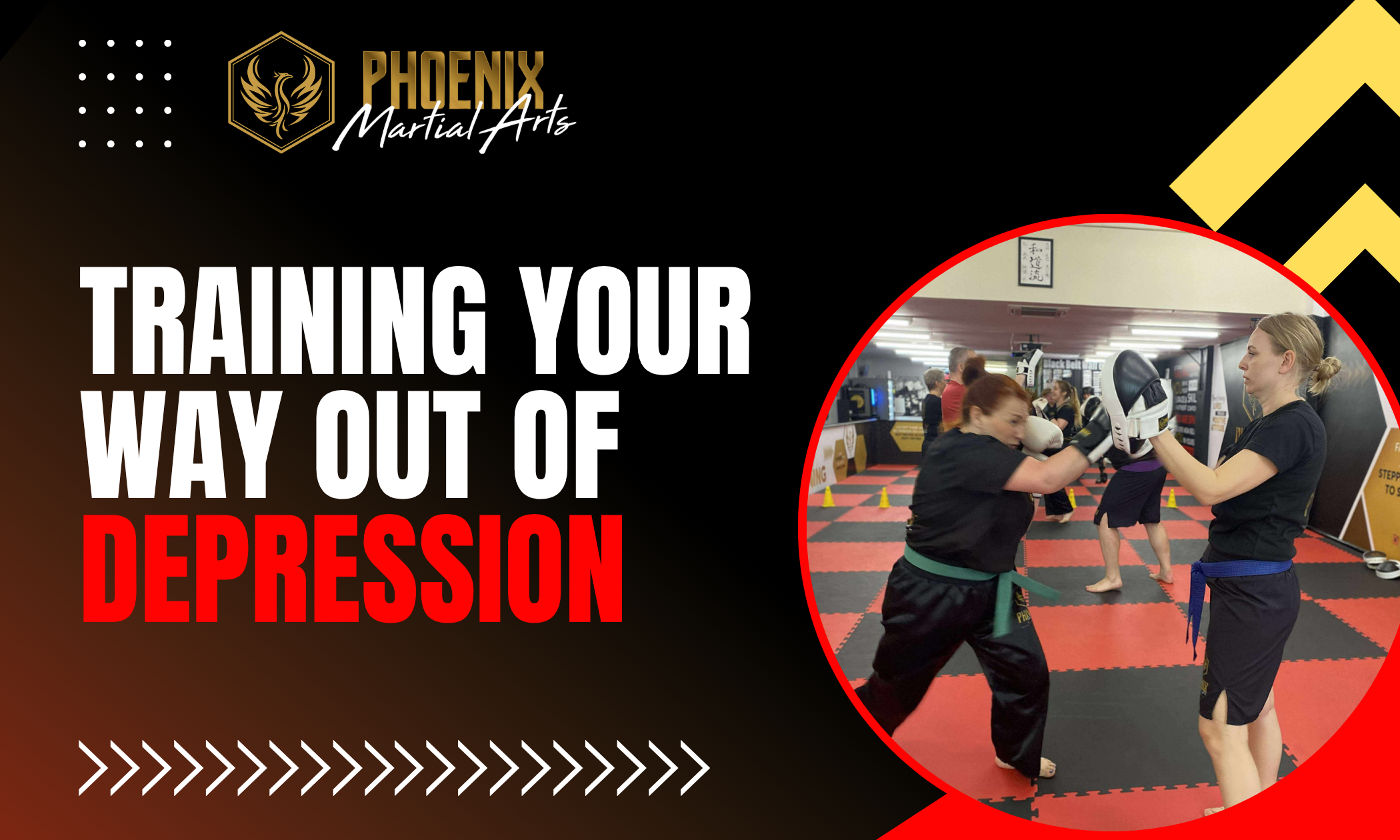
There’s something incredibly heavy about depression – something that can sit on your chest, drain your energy, and make even the simplest tasks feel overwhelming. When you’re in that headspace, the idea of training, exercising, or stepping into a martial arts class can feel completely unrealistic.
But many people don’t realise until they experience it themselves that movement can play a supportive role in managing depression. Not as a cure, and not as a replacement for professional help—but as a way to create momentum when everything feels stuck.
At Phoenix Martial Arts, we’ve seen people walk into the dojo feeling lost, drained, or disconnected, and walk out feeling a little lighter, a little steadier, and more in control. Martial arts offers something depression often strips away: structure, purpose, connection, and a sense of progress.
Let’s explore how training can help you move forward, one step at a time.
Contents
- Why Movement Matters More Than Most People Realise
- Martial Arts Is More Than Physical – It’s Emotional Release
- Building Confidence When Confidence Is at Its Lowest
- You’re Not Training Alone – Community Matters
- Routine Helps Stabilise Your Mind
- Martial Arts Helps You Stay Present
- Training Gives You Something to Work Towards
- What If You’re Not Motivated to Train?
- Martial Arts Won’t Replace Professional Support—but It Can Help
- Training Your Way Out of Depression Is Possible
- Ready to Take the First Step?
- Frequently Asked Questions
- Can martial arts really help with depression?
- Is exercise good for depression if I have low motivation?
- What if I feel anxious about starting martial arts while dealing with depression?
- Can I join Phoenix Martial Arts if I live near Wakefield, Leeds, or Castleford?
- Which martial arts classes are best for mental health?
- Is Phoenix Martial Arts a safe and supportive environment to train in?
Why Movement Matters More Than Most People Realise
Depression often traps people in a cycle of low energy and inactivity. The less you move, the heavier everything feels—and the harder it becomes to start.
Training interrupts that cycle.
Physical activity is known to support mental health by helping regulate mood, reduce stress, and restore a sense of routine. Martial arts builds on those benefits by adding focus, skill development, and personal challenge, all of which contribute to the mental benefits of martial arts that many students notice over time.
Even small wins showing up to class, finishing a drill, or learning a new movement, can help reintroduce a sense of accomplishment into your week.
Martial Arts Is More Than Physical – It’s Emotional Release
Depression doesn’t just affect your thoughts; it settles into your body. Stress, frustration, and emotional tension often build up with nowhere to go.
Martial arts provide a constructive outlet for that energy. Pad work, controlled combinations, and movement-based drills allow emotions to move through the body rather than staying bottled up. This is one reason martial arts is often linked with healthier emotional regulation and anger management, especially during periods of prolonged stress.
Many students notice that by the end of a session, their mind feels calmer, not because problems disappeared, but because the body had a chance to release what it was holding.
Building Confidence When Confidence Is at Its Lowest
One of the most difficult parts of depression is the way it erodes confidence. You start to doubt your ability to cope, improve, or even show up.
Martial arts rebuilds confidence gradually and honestly:
- You learn a technique
- You improve your balance or timing
- You complete a class you almost skipped
- You feel yourself getting stronger week by week
These small moments stack up. Over time, training helps people reconnect with their own capability, similar to how sparring and structured training can change you as a person, both mentally and physically.
You’re Not Training Alone – Community Matters
Depression thrives in isolation. Martial arts gently breaks that pattern without forcing conversation or social pressure.
Training alongside others creates a sense of shared progress. You’re part of a group moving forward together, supported by instructors who understand that everyone arrives with different challenges. This environment often helps people reconnect socially at their own pace, without judgment or expectation.
Routine Helps Stabilise Your Mind
Depression can disrupt sleep, work, eating habits and almost everything. Without structure, days can blur together.
Training days become anchors in your week.
Knowing you have a class at a specific time gives you:
- something to look forward to
- a reason to get out of the house
- a sense of purpose
- consistency that improves mental stability
- Even on days when you don’t feel like showing up, the structure helps guide you gently toward action.
Martial Arts Helps You Stay Present
Depression tends to pull the mind backwards into regret or forward into worry. Martial arts bring attention back to the present moment.
When you’re focused on your stance, breathing, guard, and technique, there’s less room for spiralling thoughts. This kind of deliberate focus is closely linked to improved concentration and mental clarity, which many students find carries over into daily life beyond training.
For that hour on the mat, your attention is anchored to something constructive and real.
Training Gives You Something to Work Towards
Depression often removes a sense of direction. Martial arts restore it through clear, achievable goals:
- learning a new skill
- improving fitness
- earning your next belt
- simply showing up consistently
These goals provide momentum and purpose, reminding you that progress is possible—even when it feels slow.
Many students at Phoenix Martial Arts say the structure of martial arts gave them meaning again. Something to work toward. Something they could be proud of.
What If You’re Not Motivated to Train?
Lack of motivation is one of the most common symptoms of depression, and it’s something we see regularly.
Lack of motivation is one of the most common symptoms of depression, and it’s something we see regularly.
You don’t need to feel ready. You don’t need to feel confident. You just need to take one small step.
Many people find it helps to know what to expect in their first martial arts class, especially when anxiety or low mood is involved. Classes are structured, supportive, and designed to meet beginners exactly where they are.
Progress comes from consistency, not perfection.
Martial Arts Won’t Replace Professional Support—but It Can Help
It’s important to be clear: martial arts is not a replacement for therapy, medical care, or mental health treatment.
What it can do is support those things by helping you:
- Establish routine
- Reconnect with your body
- Reduce isolation
- Rebuild confidence
- Manage stress more effectively
Together, these benefits can create a stronger foundation for recovery.
Training Your Way Out of Depression Is Possible
You don’t need to be fit.
You don’t need to feel motivated.
You don’t need to have everything figured out.
You just need to take one step.
Martial arts offers a structured, supportive way to start rebuilding – physically, mentally, and emotionally at your own pace.
Ready to Take the First Step?
If you’re looking for a supportive environment to rebuild confidence, routine, and mental resilience, structured training can be a powerful place to begin.
You can explore our martial arts classes or find your nearest academy to get started when you’re ready. Whether your goal is fitness, confidence, or simply feeling better day to day, the journey starts with showing up and we’ll support you every step of the way.
Frequently Asked Questions
Can martial arts really help with depression?
Martial arts can help support mental health by combining physical exercise, routine, focus, and social connection. While it isn’t a replacement for professional mental health support, many people find that consistent training helps improve mood, confidence, and emotional resilience over time.
Is exercise good for depression if I have low motivation?
Yes, gentle and structured exercise can still be beneficial even when motivation is low. Martial arts classes provide guided instruction and a supportive environment, which can make it easier to show up and move without needing high energy or confidence at the start.
What if I feel anxious about starting martial arts while dealing with depression?
Feeling anxious is very common. Beginner martial arts classes are designed to be supportive and non-judgmental, allowing you to train at your own pace. You don’t need to be fit or experienced—just willing to take the first step.
Can I join Phoenix Martial Arts if I live near Wakefield, Leeds, or Castleford?
Yes. Phoenix Martial Arts has academies across West Yorkshire, including locations in Wakefield, Leeds, Castleford, Knottingley, Cleckheaton, Selby, and surrounding areas. Each academy offers structured classes suitable for beginners.
Which martial arts classes are best for mental health?
The best class is one you can attend consistently. Many adults choose kickboxing or karate because the sessions are structured, engaging, and focus on both physical movement and mental focus. Phoenix Martial Arts offers a range of adult classes to suit different goals and fitness levels.
Is Phoenix Martial Arts a safe and supportive environment to train in?
Yes. Phoenix Martial Arts places strong emphasis on safeguarding, qualified instruction, and creating a positive training environment. Classes are structured to support both physical and mental well-being in a respectful setting.


