
How to Kick Harder: Power, Technique and Precision in Martial Arts

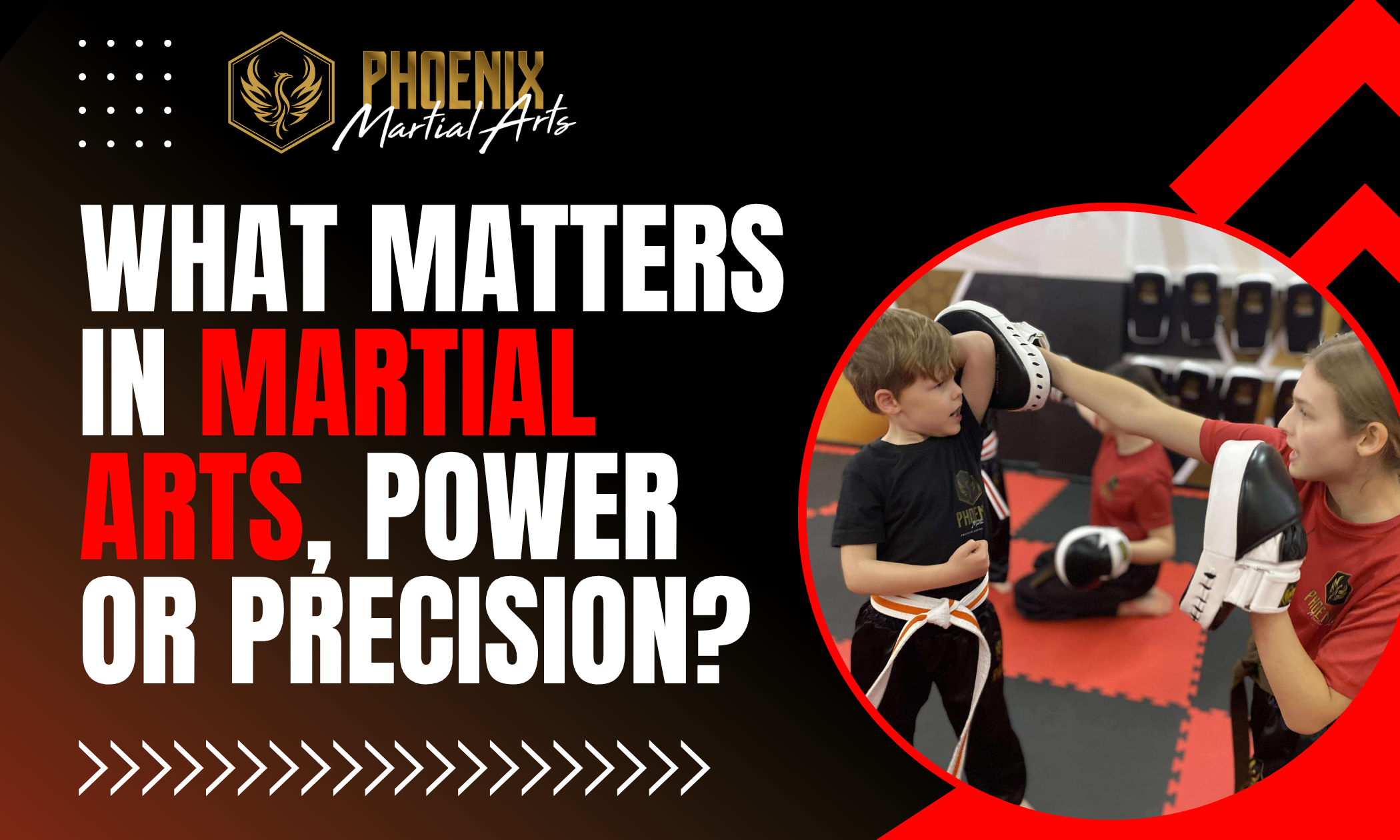
A powerful kick is not simply a case of having strong legs and trying to hit as hard as possible. Strength plays a part, but so do technique, balance, hip rotation, speed, timing, accuracy and the way different parts of your body work together.
That is why an experienced martial artist can often generate impressive power without looking as though they are forcing the movement.
The better question is not simply “How can I kick harder?”. It is “How can I make my kicking technique more efficient?”
Power and Precision Need Each Other
Power without control is not particularly useful.
You might be able to generate a lot of force, but if your balance disappears, your technique breaks down, or you cannot control where the kick lands, there is still plenty to improve.
Precision without enough commitment to the technique can have the opposite problem.
Good martial arts brings the two together.
The aim is to develop a movement that is technically sound, accurate and capable of generating appropriate power when needed. That principle applies whether you are learning karate or kickboxing.
Powerful Kicks Start With Good Technique
Beginners sometimes try to create more power by simply swinging the kicking leg harder. That usually misses an important point: the kicking leg is only one part of the movement.
A good kick starts with a stable stance and coordinated movement through the rest of the body. The supporting foot, leg, hips, torso and kicking leg all have a role to play. This is one reason the basics matter so much. Improving your overall martial arts technique gives you a stronger foundation before you start worrying about generating maximum power.
The Role of the Supporting Leg
It is easy to concentrate entirely on the leg doing the kicking. The other leg matters just as much. Your supporting leg provides the base from which the rest of the movement happens. Its position affects your balance, your ability to rotate and how comfortably your hips can move through the technique.
If that base is unstable, it becomes much harder to transfer power efficiently.
That is why foot position and stance are not minor details that can be ignored once you know how to kick.
They are part of the kick.
Hip Rotation and the Kinetic Chain
One of the biggest differences between an inexperienced kick and a more developed one is often what happens through the hips.
Rather than the lower leg moving by itself, the hips and torso contribute to the movement. This is sometimes described as the kinetic chain – different parts of the body working together rather than one muscle or joint trying to create all of the force.
During a kick, that chain can involve the supporting foot and leg, hips, core, torso and kicking leg. When those movements are coordinated, the technique becomes more efficient. When one part is badly positioned, some of that efficiency can be lost.
Your Core Helps Connect the Movement
The core is another important part of that connection. It helps stabilise your torso as your hips rotate and your kicking leg moves. It also contributes to maintaining balance and bringing yourself back into a controlled position after the kick.
That does not mean you need an extreme core workout before you can kick properly.
It means that kicking is a whole-body movement rather than an isolated leg exercise.
Speed Contributes to Power
Strength is only one part of generating force.
Speed matters too.
A technically sound kick that accelerates smoothly can generate more effective power than a movement that is tense and forced from the beginning.
That is why trying harder is not always the answer. Excessive tension can make a movement stiff and slow. As technique improves, students begin to understand when they need to stay relaxed and when they need structure and control.
Balance Is Part of a Powerful Kick
A kick is not finished at the moment it reaches the target.
You still need to remain in control.
If throwing a powerful technique leaves you unable to recover your stance, the movement can still be improved.
Balance allows you to rotate, extend the kick and return under control.
This is also why strength and mobility should work together rather than being treated as completely separate qualities. Our guide to balancing strength and flexibility in martial arts explores that side of training in more detail.
Accuracy Matters Just as Much as Force
A harder kick is not automatically a better kick. You also need control over where the technique is going, and that is where precision comes in.
Training with pads and controlled partner drills allows students to practise directing techniques accurately rather than simply throwing them with as much force as possible.
As accuracy improves, power can be developed without sacrificing control.
That is why Phoenix teaches technique before simply encouraging students to hit harder.
Timing Can Change How Effective a Kick Feels
You can perform the same technique twice and get very different results depending on when you use it.
Distance may have changed.
Your training partner may be moving towards you or away from you.
Your own balance may be different.
That is why timing and power are closely connected. Trying to generate maximum power at the wrong moment is rarely as useful as recognising the right moment to use a well-practised technique.
Does Flexibility Help You Kick Harder?
Flexibility does not automatically equal power, but having enough mobility to perform the technique comfortably can help. If movement through your hips or legs is very restricted, certain kicking positions can become more difficult.
The aim is not necessarily to perform the highest kick possible.
It is to have enough usable range of motion to perform the technique correctly while maintaining balance and control.
Strength, mobility and technique all contribute in different ways.
Why Repetition Matters
Understanding how a kick works is useful, but your body still needs practice.
At first, you may consciously think about your stance, supporting foot, hip rotation, guard and balance. With repetition, those parts of the movement become more familiar, and that allows you to pay attention to finer details such as timing, distance and accuracy.
This is one reason consistent technical practice matters more than repeatedly trying to kick as hard as possible.
Power usually improves as the movement itself improves.
Should Beginners Focus on Power?
Not initially. A beginner will usually get more value from learning the movement correctly.
That means developing the stance, balance, positioning and coordination required for the technique before worrying about how hard it feels.
Once those foundations are more reliable, speed and power can be developed progressively.
Trying to force power before the movement is stable can simply reinforce poor technique.
Karate and Kickboxing Both Develop Kicking Technique
Phoenix Martial Arts teaches kicking techniques within both karate and kickboxing, although the way techniques are used and trained can differ between the two programmes.
Our Adult Karate programme develops structured martial arts technique alongside movement, control and progression through the syllabus. Whereas the Adult Kickboxing programme combines striking, movement, combinations and fitness with practical kickboxing technique.
Junior students can develop age-appropriate kicking fundamentals through our karate and kickboxing programmes as they progress.
Better Technique Creates Better Power
If your goal is to make your kicks more powerful, simply trying to use more strength is unlikely to be the complete answer.
Look at the whole movement: your stance, supporting leg, hips, balance, speed, timing and accuracy.
When those elements start working together, power becomes a result of better technique rather than something you are trying to force. That is the difference between simply kicking harder and learning to kick better.
If you want to develop your martial arts technique with experienced coaching, explore our martial arts classes or find your nearest Phoenix Martial Arts academy and book a free taster session.


