
Stopping brain damage in martial arts

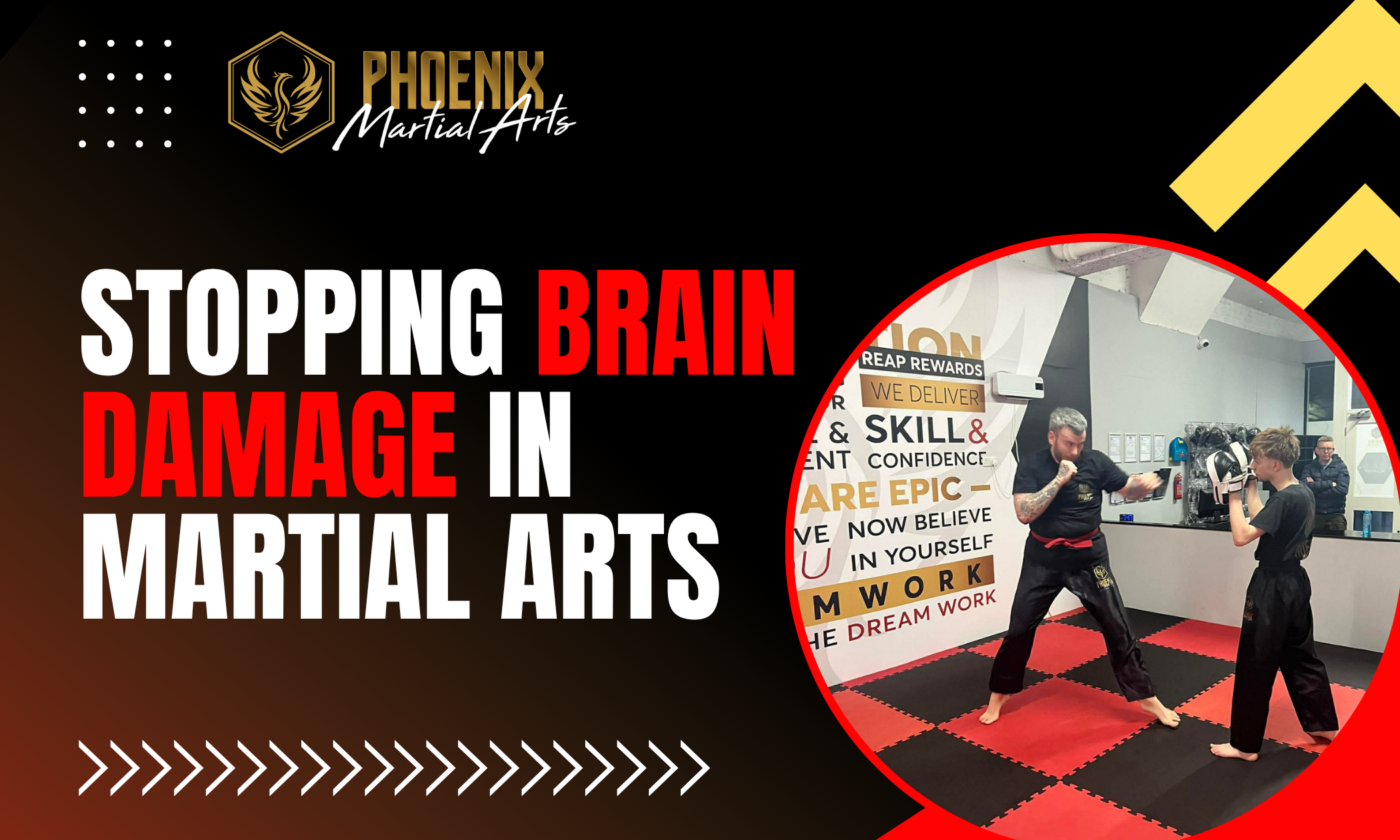
Martial arts is about strength, discipline, confidence, and growth. But let’s talk honestly about something that doesn’t always get enough attention.
Protecting your brain.
At Phoenix Martial Arts, we believe martial arts should make you healthier, stronger, and more confident, not leave you dealing with unnecessary long term damage.
That’s why safety matters.
There’s a misconception that taking heavy shots to the head is just “part of the sport” and something people should simply accept. While martial arts does involve physical contact in many styles, there’s a huge difference between smart training and reckless training.
And thankfully, awareness around brain health in martial arts is growing more than ever before.
So how can martial artists train hard while protecting themselves at the same time?
Understanding why brain health matters
Your brain controls everything.
Your reactions.
Your memory.
Your balance.
Your emotions.
Your decision making.
Repeated head trauma can have serious long term consequences, which is why protecting the brain should never be treated as weakness.
Have you ever seen someone laugh off a hard shot to the head even though they clearly looked dazed?
That old mindset is slowly changing, and rightly so.
At Phoenix Martial Arts, training smart is just as important as training hard.
The difference between tough training and dangerous training
There’s nothing wrong with challenging yourself. Martial arts should push you physically and mentally.
But there’s a line between productive training and unnecessary damage.
Good training improves:
-
skill
-
timing
-
control
-
fitness
-
awareness
Dangerous training ignores warning signs, encourages reckless sparring, and treats injuries like badges of honour.
Real martial artists understand that longevity matters.
What’s the point of training hard today if it damages your health years later?
Controlled sparring is essential
Sparring is an important part of many martial arts styles. It helps develop timing, reactions, distance control, and composure under pressure.
But sparring should not turn into uncontrolled fighting every session.
At Phoenix Martial Arts, controlled sparring is heavily valued because the goal is learning, not harming your training partner.
Good sparring involves:
-
control over power
-
respect for your partner
-
awareness of safety
-
proper supervision
Have you ever noticed how experienced martial artists often spar more calmly than beginners?
That’s because skill does not need chaos.
Protective equipment matters
Protective gear exists for a reason.
While no equipment removes all risk, proper protection can help reduce impact and prevent avoidable injuries.
Depending on the style and level of contact, this may include:
-
headguards
-
mouthguards
-
gloves
-
shin guards
At Phoenix Martial Arts, safety equipment is part of responsible training, not something to feel embarrassed about.
Looking after your health should never be seen as weakness.
Knowing when to stop
One of the most important skills in martial arts is knowing when to step back.
If someone feels dizzy, disoriented, nauseous, or unusually sensitive to light after a hit, it should be taken seriously.
Too many people ignore symptoms because they don’t want to appear weak.
But ignoring warning signs can make things much worse.
We’ve all seen situations where someone says, “I’m fine,” even when they clearly need rest. The culture around this is changing, and that’s a good thing.
At Phoenix Martial Arts, recovery and safety are respected.
Technique reduces unnecessary damage
One of the best ways to protect yourself is improving your skill level.
Better technique means:
-
improved defence
-
better movement
-
stronger awareness
-
fewer unnecessary impacts
Beginners often take more shots because they’re still learning distance, timing, and reactions.
As students improve, they usually become more controlled and harder to hit cleanly.
This is another reason proper coaching matters.
The importance of defence
A lot of people focus heavily on attack when they start martial arts.
Punches.
Kicks.
Combinations.
But defence is just as important.
Learning how to:
-
block effectively
-
move your head safely
-
control distance
-
stay calm under pressure
can greatly reduce the chances of taking unnecessary hits.
At Phoenix Martial Arts, defence is never treated as secondary. Good defence protects both confidence and long term health.
Recovery is part of smart training
Rest is not laziness.
The body and brain both need time to recover after intense training sessions. Constantly pushing through fatigue can increase the likelihood of mistakes and injuries.
Sleep, hydration, nutrition, and proper recovery habits all play a role in brain health.
Ask yourself honestly. Are you recovering properly, or just trying to “push through” everything?
Long term progress always beats short term ego.
Coaches and instructors play a huge role
A responsible instructor can make a massive difference in keeping students safe.
Good coaches:
-
prioritise control over aggression
-
stop unsafe behaviour quickly
-
encourage proper recovery
-
create a respectful training culture
At Phoenix Martial Arts, creating a safe learning environment is part of helping students grow confidently and sustainably.
Students should never feel pressured to train beyond what is safe or sensible.
The mindset around toughness is changing
For years, many combat sports environments celebrated taking punishment as proof of toughness.
Thankfully, more people now understand that protecting your brain is far smarter than ignoring damage.
True toughness is not about pretending you’re invincible.
It’s about:
-
training responsibly
-
listening to your body
-
respecting your health
-
thinking long term
Have you ever felt pressure to “just keep going” even when your body was telling you otherwise?
That pressure helps nobody.
Martial arts should improve your quality of life
The purpose of martial arts is growth.
It should make you:
-
healthier
-
more confident
-
mentally stronger
-
physically fitter
It should not leave you feeling broken down unnecessarily.
At Phoenix Martial Arts, we believe martial arts should support long term wellbeing. Students should feel stronger because of training, not fearful about the future.
Parents and younger students
For parents, brain safety is understandably a major concern.
The good news is that many martial arts classes for children focus heavily on:
-
discipline
-
coordination
-
fitness
-
confidence
-
controlled learning
rather than heavy contact.
At Phoenix Martial Arts, creating a safe and supportive environment for younger students is incredibly important. Martial arts can provide huge benefits for children when taught responsibly.
Awareness creates better martial arts culture
The more people talk openly about safety and brain health, the better martial arts culture becomes.
There’s no shame in:
-
taking a break
-
wearing protective gear
-
training lighter
-
prioritising recovery
In fact, those choices often help people stay involved in martial arts for much longer.
Smart martial artists think beyond today’s session.
Final thoughts
Martial arts should build you up, not wear you down unnecessarily.
Protecting your brain is not weakness. It’s wisdom.
At Phoenix Martial Arts, we believe the best martial artists are the ones who train with skill, awareness, and respect for both themselves and their training partners.
Because real strength is not about taking the most damage. It’s about learning, improving, and being able to continue training for years to come.
So here’s something to think about.
If martial arts is meant to improve your life, shouldn’t protecting your long term health be part of the journey too?
If you’re looking for a martial arts environment that values both progress and safety, Phoenix Martial Arts is here to help you train smarter, safer, and stronger.


